

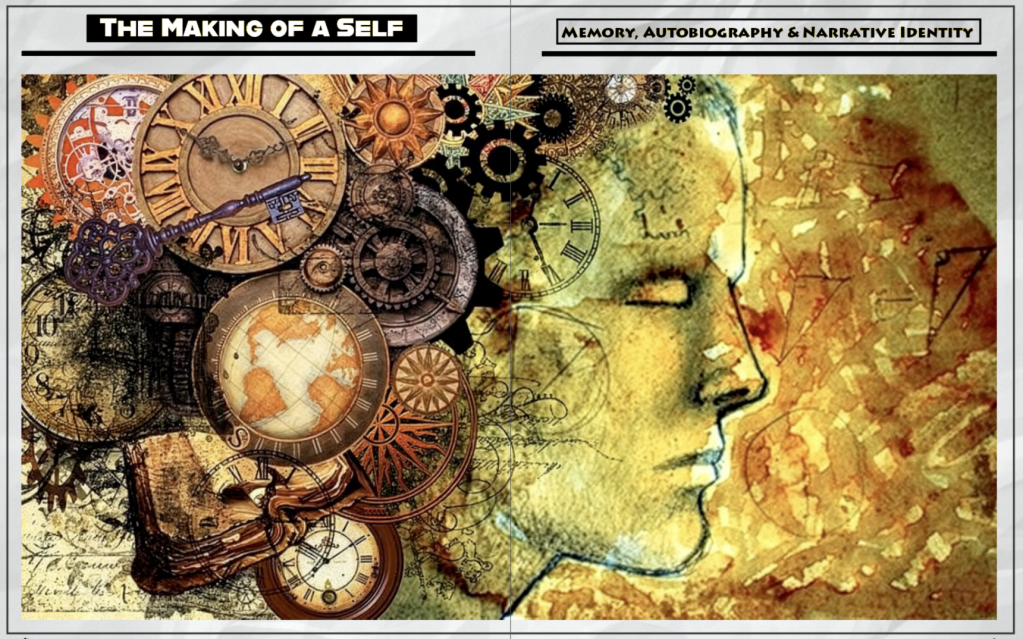
Every autobiography begins with a paradox. A person attempts to tell the truth about a life, but the person telling the story is also the person whose life must be understood. The observer and the observed are therefore inseparable. The autobiographer cannot step outside the self in order to inspect it from some perfectly neutral position. Memory intervenes, as do language, embodiment, culture, historical circumstance, other people’s memories, photographs, and the passage of time.
Finally, mortality intervenes, because the life being represented is a life that has already passed in part and will eventually pass altogether.
The fundamental problem of autobiography is therefore larger than the familiar question of whether a memoir is factually accurate. The deeper question is: What would it mean to know a life accurately in the first place?
That question places autobiography at the intersection of several disciplines that are too often considered separately. It is simultaneously a literary problem, an epistemological problem, a psychological problem, a problem of representation, and ultimately an existential problem.
The person who attempts to remember a life is also the person who has changed since the remembered events occurred.
The person who photographs a life necessarily chooses what to photograph, from where, and under what conditions. The filmmaker arranges images in sequences that create relationships among events. The historian interprets surviving evidence from within a particular conceptual and cultural horizon. Even the language through which any of these activities is described carries assumptions inherited from a particular time and place.
The attempt to represent a life therefore never provides direct access to the life itself. It provides a mediated encounter with it.
The argument of this essay can be stated simply: human beings construct continuity among changing experiences through memory, language, narrative, images, and relationships.
Because all of these mediating forms are selective and perspectival, the autobiographical self can never be a perfectly objective reconstruction of a life.
Yet the impossibility of complete objectivity does not make autobiography meaningless. Instead, the ongoing attempt to interpret, represent, connect, and revise experience is itself one of the fundamental processes through which a human being becomes a self.
We cannot escape subjectivity. We cannot fully recover memory. We cannot perfectly represent experience. We cannot defeat mortality.
And yet we cannot stop trying.
76 pages. Blurb Publications paperback. Also available as pdf.
 giblets & flapdoodle